Writing Persuasive, Customer-Focused Proposals: Your Guide to Standing Out and Winning More Business
Ashley (Kayes) Floro, CPP APMP • February 18, 2026

Submitting a winning proposal isn’t just about compliance and meeting requirements. It’s about convincing your customer that you understand their needs, challenges, and goals better than anyone else—and that your solution best will meet their requirements. Writing persuasive, customer-focused proposals is the key to standing out, building trust, and ultimately winning more business.


Why Customer Focus Matters

At the heart of every successful proposal is a deep understanding of the customer. When your proposal speaks directly to your customer’s pain points and priorities, it becomes much more than a compliance checklist, it becomes a tailored narrative that resonates. Customers want to know:


  • Do you truly understand their problem?
  • Can you deliver on your promises?
  • How does your solution benefit them?


Answering these questions with clarity and confidence builds credibility and moves evaluators closer to choosing you.


The Pillars of a Persuasive Proposal

By combining customer insight, clear messaging, and structured storytelling, you can transform your proposal from a bland, generic response into a compelling case for why you are the right choice. The following pillars provide a framework for building proposals that not only meet requirements but also resonate with your customer and inspire confidence in your ability to deliver.


1. Know Your Customer

Before you start writing, invest time in research. Understand the customer’s mission, strategic objectives, operational challenges, and past procurements. This information should be present in the capture plan—but if it’s not, do some research on your own. Much of this information will be available through some internet searching. It’s also helpful to analyze feedback from previous proposals or contract performance evaluations (e.g., Contract Performance Assessment Reports) with the customer if you have them. Remember, the more you know about your customer, the better you can tailor your message. Where appropriate in your proposal, you’ll want to leverage this understanding to tap into their aspirations and challenges and create a connection.


2. Incorporate Clear Win Themes

You’ll want to use your customer understanding to craft hard hitting win themes to incorporate into your proposal text. Win themes are concise, strategic statements that encapsulate why your offer is the best. They should:


  • Reflect the customer’s top priorities
  • Highlight your differentiators
  • Be repeated consistently throughout the proposal to reinforce your value


For example, a win theme might be: “Our proven technology reduces operational downtime by 30%, helping achieve uninterrupted service delivery.” You can read more about developing strong win themes and section themes here. 


3. Focus on Benefits

When crafting your proposal narrative, it’s critical to articulate why your solution benefits the customer. Instead of simply listing what your product or service does, explain how it benefits the customer. For example, instead of saying, “Our software has advanced analytics,” say, “Our advanced analytics enable your team to make faster, data-driven decisions that improve efficiency and reduce costs by 30%.”


4. Use Customer Language

When you use the customer’s language, you eliminate barriers, highlight alignment, and make it easy for evaluators to see you as the right fit. Evaluators are busy and often under pressure. When they see familiar terms, acronyms, and job titles, they don’t have to pause to interpret your meaning. Mirroring the customer’s language also creates a sense of connection and trust. It reassures them that you speak their language and can integrate seamlessly into their operations. 


For these reasons, when writing your proposal, you should mirror the customer’s terminology and style found in the solicitation documents, website, handbooks, and communications. For example, if the solicitation calls out a Program Manager, you’ll want to call this position a Program Manager, not a Project Manager. This may seem like a small detail, but the customer will notice! Using the same terminology the customer uses—whether from the solicitation, their website, or internal publications—demonstrates that you understand their world. It signals that you’ve listened, done your homework, and are focused on their priorities, not just pushing your own agenda. This clear alignment makes your proposal easier to read, scan, and score.


5. Provide Proof Points

You’ll also want to support your claims with evidence, such as case studies, metrics, past performance, testimonials, certifications, or pilot results. For example, after indicating that our advanced analytics enable the customer’s team to make faster, data-driven decisions that improve efficiency and reduce costs by 30%, we might include a proof statement of where we have achieved this success in the past: “For example, on XYZ contract, our advanced analytics enabled the customer to cut decision times in half and resulted in cost savings of $15M.” By adding proof statements as evidence and backing up our claims with facts and figures, we provide the necessary proof to validate our solution with the evaluator. Quantifying our substantiation points will make our content even more credible. Demonstrating past success reduces the perception of risk and helps the customer gain confidence in your capabilities, especially when you tie your capabilities back to positive outcomes for the customer.


6. Structure for Readability and Score-ability

We also want to make sure our proposal is easy to read—and easy to score! Use headings, bullet points, and graphics structured in the order of the instructions/evaluation criteria to make your proposal easy to scan and evaluate. To make your sections easy to score, structure your response to the proposal instructions and the evaluation criteria. Next map in other requirements, as required. To facilitate evaluation, consider including relevant solicitation references in your section heading titles. Additionally, evaluators often do key word searches to find what’s important to them. Make sure all sections include key words from the instructions, evaluation criteria, and the statement of work/performance work statement. To make your proposal narrative even more evaluator-friendly, leverage feature and benefit tables and highlight proof points using callout boxes.


7. Be Clear and Concise

Clarity is one of the most important qualities of a winning proposal. Evaluators often review dozens of submissions under tight deadlines, so complex wording, jargon, or filler language can slow them down—or worse, obscure your key messages. Every sentence should be easy to understand and tied directly to the customer’s priorities.


Being concise doesn’t mean oversimplifying; it means distilling your ideas into their most impactful form. Replace long-winded explanations with direct statements and eliminate buzzwords that don’t add substance. For example, instead of saying, “Our innovative, cutting-edge, next-generation platform leverages advanced synergies to optimize mission outcomes,” you might write, “Our platform improves mission performance by reducing downtime by 50% and streamlining workflows.”


Some tips for clear writing include:


  • Use plain language: Write as though you’re explaining to a smart colleague outside your industry.
  • Cut redundancy: If you’ve already made a point, don’t repeat it unless you’re reinforcing a win theme.
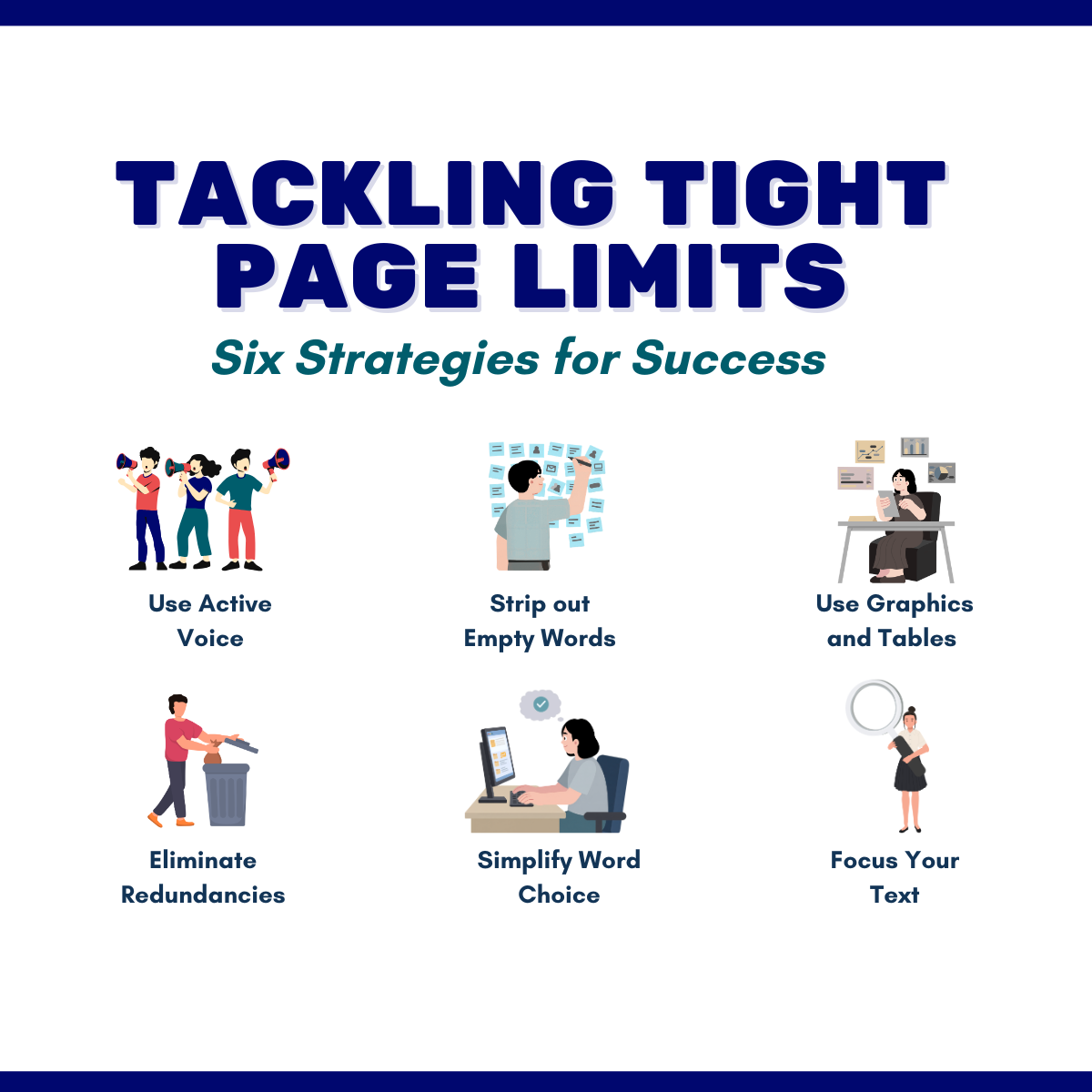
  • Prioritize active voice: “We deliver results” is stronger and clearer than “Results are delivered by our team.”
  • Use short sentences with strong verbs: Keep sentences focused and avoid unnecessary modifiers.
  • Test readability: Read your proposal out loud to catch errors or awkward sounding sentences, and use the tools built into your word processing program to check sentence length and grade-level clarity.


Concise, clear writing respects the evaluator’s time and ensures your strengths stand out without distraction. When every word adds value, your proposal communicates confidence, professionalism, and customer focus.


Final Thoughts

Writing persuasive, customer-focused proposals requires more than just subject matter knowledge, it requires empathy, strategy, and clarity. When you put the customer at the center of your message and communicate your value clearly and convincingly, your proposals become powerful tools for winning business and forging lasting partnerships.


Originally posted at Proposal Reflections.

ways to prevent proposal team burnout
By Ashley (Kayes) Floro, CPP APMP February 27, 2026
In government and commercial contracting, proposal demands can ebb and flow—but high-pressure periods are inevitable. Whether driven by shifting priorities, overlapping deadlines, or a surge of new opportunities, teams are often asked to deliver at a rapid pace with limited resources. To navigate competing priorities without overwhelming your staff, it’s essential to have intentional strategies in place that protect both performance and team well-being. Review and Prioritize the Pipeline Weekly Pipeline reviews become even more critical during the proposal busy season because tough decisions may need to be made about which opportunities to pursue. Leadership should consider the various opportunities in the pipeline, the level of readiness of the team (i.e., how much capture has been done), and the resources available to support each opportunity. Sometimes pursuing an opportunity with a low win probability can take critical resources away from an opportunity with a higher win probability. Additionally, as part of the pipeline/milestone reviews, make sure you have a bid and proposal (B&P) budget set for each opportunity being actively pursued. You should spend less time, energy, and money on low value/low profit opportunities. You never want to spend more on responding to an opportunity than you will gain from winning—unless there is a very strategic reason to do so. Finally, if your proposal team doesn’t participate in the pipeline reviews with leadership, make sure to have separate calls to review the pipeline with the proposal team so that they understand which proposals are active, as well as which proposals are coming up on the horizon. Assign out proposal leads for each opportunity so team members can understand and plan for upcoming workloads (these can always be adjusted if solicitation release dates change). When making assignments, be sure to consider any vacation times team members may have scheduled. Leverage Templates and Boilerplate When Possible Having templates ready for your team to use will save so much time and energy. You’ll want the following tools ready to use and in a place that teams can easily locate: Proposal calendars Outline/compliance matrices Kickoff decks Color team decks Writing templates Street resumes Boilerplate for common sections (e.g., management, quality, past performance, etc.) Having these templates ready will enable your team to hit the ground running. Instead of reinventing the wheel each time or searching for an old resource as a starting point, your team can focus their time on entering information into the schedule and compliance matrix templates, adjusting the writing templates to meet the formatting requirements of the solicitation, and moving forward with the proposal process smoothly and efficiently. Keep Your Team Fueled on Long Days If your team is collocated, bring in snacks to keep your team fueled during long days (granola bars, peanut butter crackers, nuts, dried fruits—and a few sweet treats like Twizzlers or mini candy bars). When teams stay in the office late to meet a critical deadline, order in pizza or have sandwiches delivered. For remote teams that are working long hours to meet deadlines, consider sending electronic food delivery certificates (e.g., DoorDash or Grubhub) to keep the team fueled and morale high. Schedule Breaks and Downtime With multiple looming deadlines and an overwhelming workload, it can be so easy to try push through a long day without any breaks. However, it has been proven that this approach can negatively affect overall output. Taking breaks is critical for maintaining productivity. Short, regular breaks can help prevent burnout, improve focus, and boost overall performance by allowing brains to rest and recharge. But the right kinds of breaks matter. Studies show that scrolling on your phone or surfing the internet can overload your brain and leave you even more depleted. Better break choices include taking a walk, doing a small chore, meditating, or chatting with a friend or coworker. Have your team aim for a five-minute break for each twenty-five minutes of work. If this seems overwhelming, remember that even breaks as short as a minute—if they are effective breaks—can improve performance and productivity. Additionally, after your teams meet a proposal submission deadline, particularly if they have been working long hours, make sure to give them some time off if the schedule allows. This will allow your team members to recharge and come back ready to tackle the next project more effectively. Bring In Extra Resources if Necessary Sometimes you might not have sufficient resources to handle all the opportunities in your pipeline. If this is the case, you may need to work with leadership to see if the B&P budget allows for bringing in consultant resources. Consultant resources may come at a higher hourly rate than your full-time team members—but they can be brought in for a short time to help meet surge demands, and then you don’t pay for them anymore once they are done with their assigned task(s). This is also generally a better option than burning out your team and then having to recruit and onboard new employees once the burnt-out team members leave. Check In with Your Team Regularly, But Keep Meetings Short It’s critical to keep a pulse on how your team is doing when stress levels are high. Check in regularly with team members to see how they are doing and whether there are any issues/roadblocks keeping them from meeting any of their deadlines. Help provide them with additional resources, if necessary, or track down information they may have been waiting on from a subject matter expert or stakeholder. But don’t flood calendars with unnecessary meetings, or overly long meetings. Check-in calls can be great—but keep them to 15 minutes or shorter. Leverage email, chat, text, and quick calls where it makes sense. Final Thoughts Managing proposal workloads effectively requires more than simply working longer hours—it requires thoughtful planning and sustainable processes. By prioritizing opportunities strategically, leveraging templates and proven tools, supporting your team’s energy and morale, and building in space for recovery, you create an environment where people can consistently perform at a high level. A well-prepared, focused, and supported team will always outperform one that is stretched too thin. When you take care of your people and streamline your approach, you position your organization for stronger results and a healthier, more resilient proposal culture over the long term. 
Proposal team storyboarding
By Ashley (Kayes) Floro, CPP APMP February 25, 2026
In proposal development, the difference between a rushed response and a winning one often comes down to planning. One of the most effective planning tools is storyboarding—the process of transforming strategy and requirements into a clear, organized roadmap for writers. Storyboarding bridges the gap between big-picture strategy and detailed content. Instead of diving straight into writing, it forces teams to pause and address critical questions up front: What win themes should we emphasize? How do we differentiate ourselves from competitors? What proof points and evidence will make our claims credible? By answering these questions early, proposal teams ensure the final product reflects a deliberate strategy rather than a patchwork of boilerplate. This step is especially important in complex proposals where multiple authors contribute. Without storyboards, sections can easily become repetitive, inconsistent, or off message. With storyboards, however, teams gain a shared outline, unified messaging, and a structured plan that keeps writing focused, compliant, and persuasive. Storyboarding also accelerates the writing process by reducing blank-page paralysis, supporting early graphic planning, and revealing gaps in data or compliance before they derail schedules. In short, it gives teams the clarity and confidence needed to write stronger proposals. What Is Storyboarding? Storyboarding is the process of outlining the content and structure of your proposal sections before writing begins. Think of it as creating a blueprint: it shows the writer what to say, in what order, and with what supporting evidence. Storyboarding is important because: It keeps the writing aligned with the win strategy. Storyboards tie each section to evaluation criteria, customer hot buttons, and discriminators. It saves time. Writers work faster when they know what to write, and what not to. It improves consistency. When multiple authors contribute to a proposal, storyboards provide a shared vision that keeps the tone, content, and structure cohesive. Best practices for storyboarding include: Incorporate key messaging. Highlight your themes, benefits, and proof points in each section. Make them visual when possible. Use tables, diagrams, and callouts to plan graphics and reinforce major messages. Include RFP references. Tie each storyboard element to a specific section or instruction from the solicitation. Assign clear owners. Each storyboard should name a lead writer, contributors, and reviewers—along with target dates. Encourage teamwork and cross-reading. Storyboarding works best when it isn’t done in silos. Have multiple contributors work together to complete each storyboard. Then have the different section contributors cross-read the other storyboards to make sure there is consistency in the approaches. Storyboard Template Below is a sample storyboarding template that can be modified to align with your solutioning process. This format helps writers map out proposal content section-by-section, ensuring alignment with requirements, win themes, and the approved solution.  - - - - - - - - - - - - - - - - - - - - - - - - - - - - - - - - - - - - - - - - - - - - - - - - - - - - - - - - - - - - - - - - - - - - - - - - - - - - - - - - - - - - - - - - - - - - - - - - - - - - - - - - - - - - - - - - - - - - - - - - - - - - - - - - - - -
graphs with upward trend and text
By Ashley (Kayes) Floro, CPP APMP February 24, 2026
Winning proposals don’t just happen because the solution is strong—they happen because the proposal is structured to earn points. Too often, teams focus solely on what they want to say, rather than how evaluators will read, interpret, and ultimately score their response. If you want to increase your probability of win, you must first understand how proposals are evaluated and then write with that scoring process in mind. By aligning your content to evaluation criteria, highlighting clear strengths, and making it easy for evaluators to assign high ratings, you can transform a compliant submission into a high-scoring, competitive proposal. Understanding Proposal Evaluation Before we can really understand how to make proposals easier to score, we have to understand how proposals are being evaluated. The first thing to understand is that proposals are typically first reviewed for compliance with the requirements as outlined in the proposal instructions. Next, the proposals are scored based on the evaluation criteria. Customers frequently assign strengths, weaknesses, and deficiencies to back up their scores. To receive an “Exceptional” score, your strengths have to outweigh any weaknesses, and no major deficiencies can be present. When using this scoring method, a deficiency is typically defined as a material failure of a proposal to meet a customer requirement or a combination of significant weaknesses in a proposal that increases the risk of unsuccessful contract performance to an unacceptable level. A weakness is defined as a flaw in the proposal that increases the risk of unsuccessful contract performance. And significant strengths are defined as aspects of an offeror's proposal that have merit or that exceed specified performance or capability requirements in a way that will be advantageous to the customer during contract performance. In our proposals, we want to minimize any weaknesses and deficiencies and maximize our strengths and significant strengths. Organize Content So It’s Easy to Score Understanding that proposals are scored, it makes good sense that when we’re writing proposals, we need to present the information in a way that is easy for evaluators to score. Most evaluators do not volunteer for the job and do not particularly enjoy it. It takes time away from their regular job, so they want to get it over with as quickly as possible. Therefore, we should aim to make the evaluator’s job as easy as possible. To make your sections easy to score, structure your response to the proposal instructions and the evaluation criteria. Next map in other requirements, as required (e.g., elements of the statement of work). To facilitate evaluation, consider including relevant RFP references in your section heading titles; this helps evaluators understand the logic of your organization and map your responses back to their evaluation scoresheet. Use RFP Language When writing proposals, you should also strive to use the language in the RFP to make the evaluation easier. For example, if the RFP asks for a Program Manager, you should use the title, Program Manager, not Project Manager. You should also strive to use the customer’s terminology and lexicon in our proposal to gain the customer’s confidence. By knowing your customer and speaking their language, you demonstrate that we understand them, and you begin to establish trust. What’s more, your customer evaluators often do key word searches to find what’s important to them in your proposals. To support them in this endeavor, you should make sure all sections include key words from the instructions, evaluation criteria, and the statement of work. Theme Statements Another way to help evaluators to score you higher is to include theme statements or strength statements consistently throughout your response. Theme statements set the stage for the section and grab the evaluator’s attention because they address an issue that is important to them. The ideal theme statement not only presents a solution feature that addresses a customer hot button, it also articulates clear, quantified benefits. I recommend including a theme statement for every first-level section and second-level subsection and formatting those themes to stand out from the rest of the text. If you theme effectively, the theme statements will show up as identified strengths in the evaluation debrief from the customer. Callout Boxes Another way to arm evaluators with the ammunition they need to give you a high score is to use callout boxes to help your major proof points stand out. Be sure that your proof points not only highlight quantified metrics, but make sure to provide the “so what?” statement as well. For example, it’s not enough simply to state: “We have used our proven staffing process to staff programs with 3-, 7- and 14-day turnaround times, including the MNOP program, where we staffed 15 FTEs in two weeks.” Ask yourself, “So what? What does this mean for my customer?” This might prompt you to add, “Leveraging this staffing process, we provide Customer ABC with low-risk task order start-up and delivery for large, small, short-term, and long-term requirements.” Feature and Benefit Tables Feature and benefit tables are another great way to help evaluators find proposal strengths. Similar to theme statements, feature and benefit tables highlight major solution features—that ideally address customer hot buttons—and articulate clear, quantified benefits. Typically, customers want things cheaper, faster, and/or better, which we might express as low cost, low risk, high quality, efficient, and/or effective. Use feature and benefit tables in each major section introduction to highlight the key elements of your approach. This could be every first-level section for shorter proposals, but it may be extended to each second-level subsection for longer proposals. Articulate Benefits Throughout As touched on previously, benefits tell the customer why they should care about our solution or its features; they articulate the “so what?” But, it’s critical to remember that benefits should be things that the customer cares about. For example, if the customer doesn’t care whether the transition is completed in three weeks or six weeks, then expedited timeline is not a benefit to that customer. It’s also critical to remember that benefits should be highlighted throughout the proposal narrative. It’s not enough for benefits to show up in theme statements, callout boxes, and feature benefit tables—these benefits need to be articulated and reinforced throughout the proposal narrative as well. Make the Response About the Customer Another critical way to score higher is to make sure you are focusing on the customer. Two key signs that your proposal writing lacks customer perspective include: (1) the proposal mentions your company or team name more than the customer’s name; (2) the proposal is about your company’s offer instead of the solution and benefits the customer will receive. A great proposal is about the customer and the benefits they receive from the proposed solution. One of the easiest ways to make our proposal content more customer focused is to put them first—literally. Instead of saying, “Team ABC’s solution delivers a low-risk transition,” flip the construction and write, “Customer A receives a low-risk transition with our comprehensive transition approach.” The two sentences convey the same overall message, but by putting the customer first in the sentence, we shift the focus onto what the customer is receiving rather than what we are delivering. Another easy way to make your proposal content more customer focused is to use the customer’s name more frequently than your company or team name. To validate whether you are doing so, you can try this quick test: hit Ctrl-F and search for the number of times you mention your company and/or team name; then search for the number of times you mention the customer’s name. You should aim to mention the customer’s name more times than yours. If you find that you have mentioned the customer far less frequently, you should revise our text to focus more on the customer and the benefits they will receive by choosing your solution. Final Thoughts In this world of bids and proposals, we all certainly want to win more. However, there are so many factors that impact a company’s probability of win, and a number of things throughout the opportunity lifecycle can impact a company’s chances of winning (both positively and negatively). Although the capture phase has the greatest potential to positively impact your chances of winning, you can certainly take steps to help your proposals score higher during the proposal writing stage. These actions include organizing content so it’s easy to score; using RFP language, theme statements, callout boxes, and feature and benefits tables; articulating benefits throughout the response; and making the response about the customer. These critical components during the writing phase can go a long way in facilitating the evaluation process and increasing your overall score—and a higher score can easily translate to a higher probability of win!